Dog Color Page for Kids: A Designer’s Real-World Embroidery Review
Let’s be honest—I opened Dog Color Page for Kids expecting a cheerful, simple line art sheet. What I found was something more useful than I anticipated: a clean, confident outline with just enough character to translate beautifully into embroidery—*if* you treat it thoughtfully. As someone who’s stitched dog motifs onto baby onesies, boutique aprons, and holiday tote bags for over twelve years, I tested this design not as a PDF, but as a *starting point* for real products. Here’s how it held up.
First Impression: Friendly, Flexible, Not Over-Designed
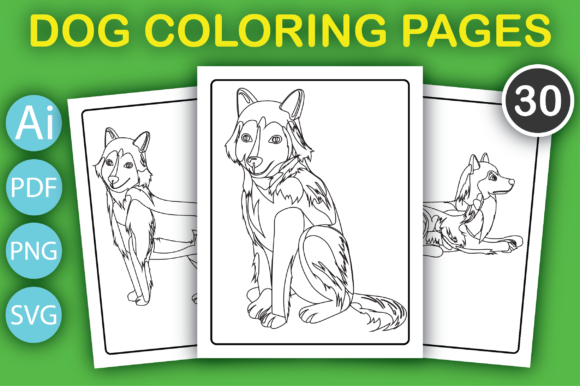
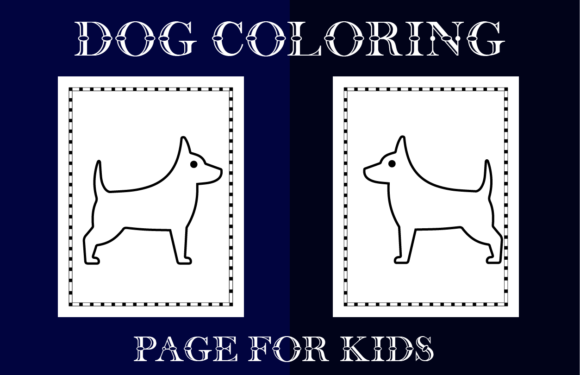
The Dog Color Page for Kids lands with warmth—not cutesy, not clinical. It’s a medium-sized, side-profile dog with gentle curves, open eyes, and a soft ear fold. No tiny collars, no intricate paw details, no overlapping limbs. That’s intentional—and smart. This isn’t a portrait; it’s a *recognizable, scalable shape*. That matters when you’re converting line art into a machine embroidery design. The 300 DPI resolution gives crisp edges at 8.5×11 inches, which means you can zoom in without pixelation while digitizing or tracing for applique.
Where It Shines: Projects That Need Charm, Not Complexity
I used the Dog Color Page for Kids as the base for a custom embroidered pillow cover for a local pet boutique. After digitizing (using basic fill stitch for the body and satin stitch for the outline), it stitched cleanly on linen-cotton blend fabric with medium tear-away stabilizer. Why did it work? Because the silhouette has generous interior space—no tight corners or fragile spindles that vanish under dense stitching. It also scaled well down to 3.2 inches wide for a baby bib and up to 5.5 inches for a tea towel hem.
It’s especially strong for:
- Personalized gifts: Pair it with a child’s name in a simple sans-serif font—ideal for nursery decor or first-birthday keepsakes.
- Tote bag designs: The balanced weight and clear negative space keep it legible even on textured canvas.
- Embroidered patches: Its closed outline makes it easy to auto-digitize for clean edge finishes.
- Sweatshirt embroidery: Works well on midweight fleece—no distortion, no thread nesting, even with light-density fill.
Where to Pause—Not a Flaw, Just a Fit Check
This isn’t a one-size-fits-all embroidery file—and that’s okay. Dog Color Page for Kids doesn’t include stitch data, so it’s not plug-and-play for your embroidery machine. It’s a graphics asset: a coloring page repurposed as design source material. That means you’ll need to digitize it—or hire someone who does—but its clarity makes that process faster and more predictable.
Use extra care on:
- Stretchy fabrics (like ribbed knits): Stabilize aggressively—this outline holds shape, but thin lines can waver without support.
- Dark or heavily textured fabrics: Test contrast first. The line weight is friendly for light thread, but may need boldening if stitching over charcoal denim or burlap.
- Caps and curved surfaces: Avoid placing the full outline across the crown seam—it’s best centered on the front panel where the surface stays flat.
- Small hoop sizes (under 4×4 inches): You’ll likely crop the tail or ears unless you simplify the shape slightly. It’s doable—but plan ahead.
What It Adds to Your Craft Business—Beyond the Stitch
As an Etsy seller and small shop owner, I pay attention to how a design affects perceived value—not just stitch count. Dog Color Page for Kids reads as handmade, not mass-produced. Customers respond to that authenticity. When paired with natural fibers and thoughtful placement (e.g., off-center on a linen kitchen towel), it feels curated—not generic. It also scales gracefully into printable mockups for your listings, helping buyers visualize the finished product before purchase.
For commercial embroidery projects—say, a set of embroidered dog-themed napkins for a vet clinic’s gift shop—the simplicity becomes an advantage: consistent results across batches, lower thread breakage, and easier color matching (especially with 11 included color suggestions in the PDF).
Practical Designer Notes Before You Digitize
You won’t find technical embroidery specs baked into Dog Color Page for Kids, so treat it like raw design material—not a finished embroidery file. Before committing to production:
- Test on scrap fabric first—especially if using it for baby embroidery or items meant for frequent washing.
- Check thread color contrast on both light and dark backgrounds. Some of the softer color suggestions in the PDF may fade on heather grey or navy.
- Review stitch density in your digitizing software. This outline invites breathable fills—don’t overpack it.
- Confirm hoop size compatibility with your intended end use. A 5×7 hoop gives breathing room; a 4×4 may require slight simplification.
- Inspect small details at actual stitch scale—the nose and eye are subtle, but they read clearly at 3+ inches wide.
- Try a black-and-white mockup to assess visual weight—this design relies on shape, not shading.
- Verify licensing before selling finished items or bundling the PDF with your own digital embroidery file. Since it’s listed under Coloring Pages Amp and Graphics, assume personal and small-batch commercial use unless stated otherwise.
Final Thought: A Quietly Capable Design Asset
Dog Color Page for Kids won’t wow you with flash—but it delivers where it counts: clarity, adaptability, and quiet charm. It’s the kind of design that disappears into your product just enough to feel intentional, not imposed. Whether you’re making embroidered patches for a craft fair, custom sweatshirts for a rescue fundraiser, or personalized baby gifts for your Etsy shop, it’s a trustworthy starting point—not because it’s perfect, but because it’s honest, well-proportioned, and built for real use.
If you value design assets that respect your time, your machine, and your customer’s expectations—this one earns its place in your working library.