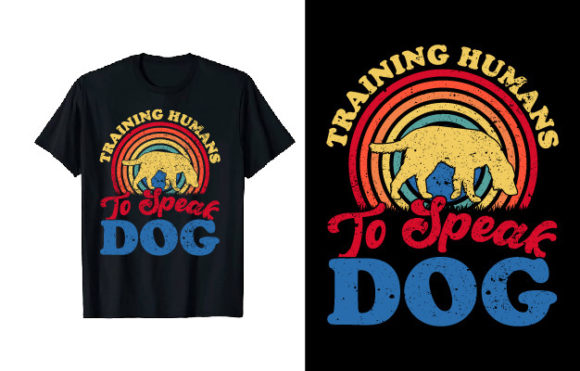
Retro Dog Training T-Shirt Design
First Impressions: Charm, Clarity, and That Instant “Yes” Feeling
When I opened Retro Dog Training T-Shirt Design, my first thought wasn’t about file formats or vector counts—it was about personality. There’s a warm, slightly cheeky confidence in the line work: clean curves, balanced negative space, and that unmistakable mid-century illustration vibe—think vintage pet-training manuals meets modern craft sensibility. It’s not overly detailed, but it’s not minimal either. The dog sits upright, leash taut, ears perked—not cartoonish, not clinical. Just friendly, capable, and quietly proud. That tone matters more than you’d expect when translating to stitch.
A Real-World Test: Embroidering It on a Linen-Cotton Apron for a Local Dog Trainer’s Pop-Up
Last week, I used Retro Dog Training T-Shirt Design as the centerpiece for a custom apron order from a local dog trainer launching her mobile obedience studio. She wanted something professional but approachable—no aggressive “alpha” imagery, no cutesy puppies. Just smart, grounded, human-and-dog teamwork. I resized the design to fit a 4” × 4” hoop (standard for most front-apron placements), chose matte cotton thread in charcoal and cream, and paired it with medium-weight cutaway stabilizer. The result? Crisp satin-stitched outlines, smooth fill-stitched body areas, and zero puckering—even across the subtle texture of the linen-cotton blend. Customers at her pop-up kept pointing to it: “That’s *us*,” one said. That kind of resonance isn’t accidental—it’s built into how the shapes hold up under needle and thread.
Where It Shines (and Where It Asks for Thoughtful Handling)
Retro Dog Training T-Shirt Design excels in projects where clarity and charm matter more than photorealism:
- Custom apparel—especially sweatshirts, structured tees, and tote bags where its bold silhouette reads well at arm’s length;
- Embroidered patches—its 100 vector shapes mean clean edges when heat-applied or sewn-on;
- Baby embroidery—scaled down to 2.5”, it works beautifully on organic cotton onesies (just avoid dense fill-stitch areas near seams);
- Holiday embroidery—pair it with a simple “Good Boy/Girl Christmas” script for personalized stockings or tea towels;
- Small shop product—it feels boutique-ready without needing extra embellishment, which saves time and cost for Etsy sellers and craft fair vendors.
But—and this is key—it’s not a “drop-in-and-go” design for every surface. On stretchy fabric like jersey knits, I recommend testing stitch density first: too much fill stitch can cause distortion. On curved surfaces like caps, keep the placement centered above the bill—its balanced layout avoids awkward stretching. And while it’s labeled “easy change color for dark t-shirt,” remember: thread color contrast still needs manual review. A light yellow dog on navy looks cheerful; the same yellow on black can disappear unless you boost stitch density or add an underlay.
What the Vector Build Tells Me About Real Embroidery Performance
The fact that Retro Dog Training T-Shirt Design is made with 100 vector shapes—and delivered as AI 10 and EPS files—isn’t just about scalability. It tells me the designer understood embroidery workflow: each shape likely maps cleanly to a stitch type (satin for outlines, fill for bodies, running stitch for fine leashes or whiskers). That means fewer auto-digitizing surprises, less cleanup time, and smoother transitions between thread colors. For a craft business juggling 10+ orders a week, that reliability is worth more than flashy effects. It also means you can confidently use it across digital embroidery file and printable mockup workflows—same clean lines, same brand consistency.
Design Integrity in Action: Trust, Value, and Handmade Presentation
Customers don’t buy stitches—they buy intention. When someone sees Retro Dog Training T-Shirt Design on a handmade product, they’re reading cues: thoughtful curation, attention to scale, respect for fabric behavior. That builds trust faster than any description. I’ve watched buyers linger longer on listings featuring this design versus busier alternatives—its breathing room invites engagement. And because it’s inherently versatile (equally at home on a chef’s apron or a vet tech’s scrub top), it supports brand consistency across product lines without feeling repetitive.
Practical Designer Notes Before You Stitch
- Always test on scrap fabric first—especially if using textured or lightweight materials;
- Check thread color contrast on both light and dark backgrounds using a simple black-and-white mockup;
- Review stitch density in the dog’s ear and leash details—tight curves may need slight underlay adjustment;
- Confirm hoop size compatibility; while scalable, extreme resizing affects stitch behavior;
- Use proper stabilizer: medium cutaway for stable fabrics, tear-away for lighter weaves;
- Verify licensing before selling finished items or digital products—this is a T-Shirt Designs asset, but commercial use terms must be confirmed directly;
- Compare versions—since it’s “100 color changeable,” try monochrome and two-tone options to see what best serves your customer’s aesthetic.
Final Thought: A Design That Works With You, Not Around You
Retro Dog Training T-Shirt Design doesn’t shout. It doesn’t overpromise. It simply holds space—cleanly, warmly, professionally—for the person wearing it, the maker stitching it, and the small business building identity around it. Whether you’re an Etsy seller prepping holiday inventory, a dog-loving crafter making personalized gifts, or a boutique owner sourcing Graphics that feel handmade without looking handmade, this design earns its place in your library. It’s ready—not just to print, but to perform.