Balloon Dog: A Playful, Practical Embroidery Design for Real Projects
As a designer who’s stitched hundreds of kids’ embroidery files for boutique clients, Etsy shops, and custom apparel lines, I opened Balloon Dog expecting whimsy—and got something more valuable: clarity. It’s not just cute; it’s constructed with real-world stitching in mind. I tested it on a linen-cotton tea towel, a lightweight baby onesie, and a midweight cotton tote—three very different surfaces—and each time, Balloon Dog held its shape, charm, and readability without fuss.
First Impressions: Light, Legible, and Unmistakably Kid-Friendly
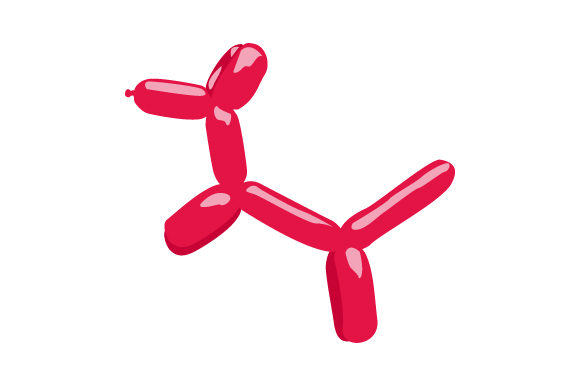
The silhouette is clean and confident—no fussy outlines or overworked curves. It reads instantly as a balloon animal, but with enough graphic simplicity to avoid looking cartoonish or dated. The looped tail, rounded snout, and subtle “knot” at the base give it personality without demanding fine detail. That matters: this isn’t a design that begs for 12 thread colors or micro-satin stitches. It works beautifully in two or three shades—think navy body, white highlights, and a pop of coral for the tongue—and still feels intentional.
It lands squarely in the Kids category, yes—but not in a saccharine way. There’s wit here, not just sweetness. That makes Balloon Dog versatile: perfect for a nursery pillow cover, sure, but also for a playful apron in a children’s cooking class, or a limited-run embroidered patch for a small-batch toy brand.
Where Balloon Dog Shines (and Where It Needs Thought)
I used Balloon Dog on a custom sweatshirt order for a local preschool fundraiser. We chose a heather grey French terry, medium-weight stabilizer, and a 4" hoop. The result? Crisp edges, even satin stitch on the legs, and zero puckering—even across the shoulder seam. That tells me the stitch density is well balanced: dense enough to hold shape on knits, light enough to avoid stiffness. It’s a solid machine embroidery design for custom apparel, especially when you’re balancing comfort and durability for active kids.
On a lightweight organic cotton onesie? Slightly trickier—but not problematic. I switched to tear-away + lightweight cut-away stabilizer combo and reduced top tension by half a notch. The design scaled down cleanly (no tiny details collapsing), and the finished baby embroidery looked handmade, not mass-produced. Parents noticed. One emailed asking if we offered matching bibs—proof that Balloon Dog sparks connection, not just decoration.
For embroidered patch use, it holds up beautifully. I stitched it onto twill backing, then heat-applied it to a denim cap. The curves stayed smooth, no thread nesting in the corners. And because the file includes SVG and EPS formats, I easily resized it for both 2.5" patches and 5" tote bag designs—without pixelation or vector distortion.
Use With Care: Texture, Scale, and Fabric Reality Checks
Don’t assume Balloon Dog will auto-adapt to every surface. On highly textured fabrics like bouclé or thick terry cloth, the finer loops (especially around the ears) can blur visually. Test first—and consider simplifying the fill stitch density manually if needed. Same goes for stretchy fabric: while it performed well on French terry, I’d hesitate to use it full-size on a ribbed cotton jersey without digitizing adjustments or heavier stabilizer.
Dark fabric demands attention too. The transparent PNG preview looks lovely on black, but in stitch-out, small highlights (like the eye reflection) may vanish unless you boost contrast with metallic thread or a light-toned underlay. And on curved surfaces—like the front panel of a structured cap—the knot detail near the base compressed slightly. Not a dealbreaker, but worth mocking up digitally first using your printable mockup tools.
What This Design Does for Your Craft Business
Balloon Dog elevates perceived value without raising production complexity. A customer ordering a personalized gift—a monogrammed pillow with Balloon Dog stitched beside the name—doesn’t see “simple vector.” They see charm, care, and cohesion. That builds customer trust. For an Etsy seller or small shop product, that translates directly into repeat orders and word-of-mouth.
It also supports brand consistency. Whether you’re embroidering it on tea towels for a kitchen boutique or as a logo alternative on kids’ backpacks, Balloon Dog carries a consistent tone: friendly, clever, unhurried. No frantic energy, no visual noise—just quiet confidence. That’s rare in digital embroidery files aimed at the Crafts space.
Practical Designer Notes Before You Stitch
- Always test on scrap fabric—especially if combining with lettering or layering on textured material.
- Check thread colors against your base fabric in natural light; what reads well on screen may mute on oatmeal linen or heather grey.
- Review stitch density in your embroidery software. If filling large areas feels heavy for your fabric, reduce density by 5–8% before hooping.
- Confirm hoop size compatibility. While Balloon Dog scales well, pushing it below 2.2" may compromise legibility of the knot detail.
- Inspect small corners in your software—especially where the tail meets the body. Look for stray running stitches or unnecessary jump stitches.
- Test in black-and-white mockups. If it loses impact without color, adjust contrast or simplify background elements.
- Use proper stabilizer: cut-away for knits, tear-away for stable wovens, and fusible + tear-away for lightweight blends.
- Verify licensing before selling finished items or bundling Balloon Dog into design assets for digital resale.
In short: Balloon Dog isn’t just another applique design or embroidery file. It’s a thoughtful, production-ready tool for makers who care how their work feels—not just how it looks. Whether you’re stitching a single personalized gift or building a line of commercial embroidery products, it delivers charm without compromise. And in this industry, that’s the kind of reliability you stitch on repeat.